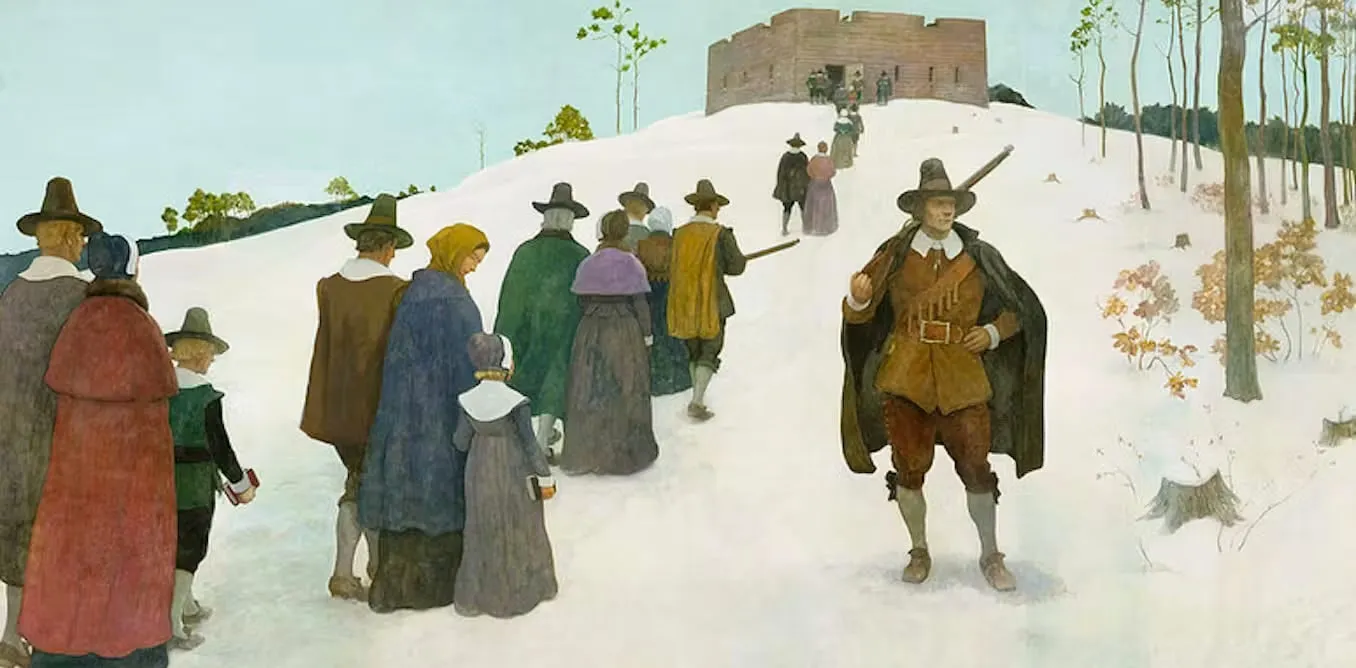
You’ve just emerged from the 16th century. It’s the Little Ice Age. On a frosty New England morning you’re marching with your village to a congregational meeting house. You take your seat in a bleak pew. It’s as cold as the sheets of snow. Underneath the meetinghouse, a giant stash of gunpowder sits in silence, and not a candle is lit. So volatile is the space that one spark will blow the whole congregation to its final judgment.
Inside the biting air meets puffs of breath that punctuates the congregation’s singing. Fugitive fingers break free from puritan discipline — stretching to avoid frostbite. More than one congregant has succumbed to the hall’s bitter cold. Fingers blacker than gun powder are a numb reminder that suffering is the journey to an American Elysium.
On those gray mornings, it was the only warmth they had — voices joining together, each finding comfort and community in the hymns they sang. Music became a way to defy the cold and bond through shared faith.
It’s 180 years after that Mayflower settlement and it’s 1801. In relative comfort, puritans are democratizing music. William Little and William Smith write a book that simplifies music instruction into simple shapes, The Easy Instructor. The primitive shapes, shape-notes, began to take hold of a burgeoning American culture — Triangle, Square, Diamond, and Circle. 🔺Fa, 🔳 Sol, 🔶 La, 🟢 Mi.
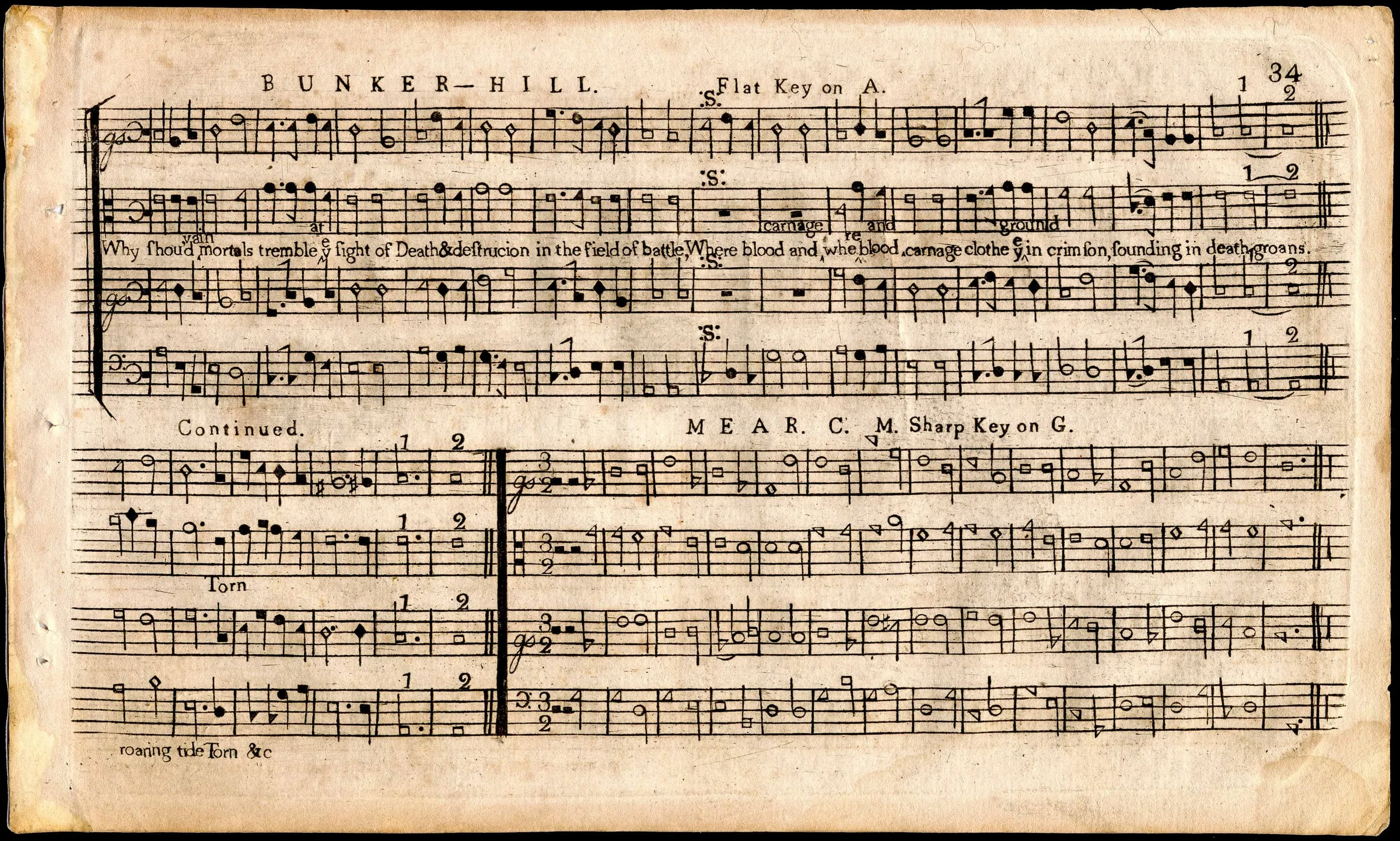
Now music, punctuated by a chopping hand lead congregations in full-throated harmonies and worship. Perfection wasn’t the goal. It was community and evangelization. Democratizing music on those icy shores was just the beginning. Shape-notes will climb blue mountains and seep into the hot and humid Mississippi Delta.
Puritan educators, empowered by zeal fanned local excitement through music schools and itinerant teachers. The movement grew past its New England borders and into the south.
Cracker School
In the rugged hills and hollers of Appalachia, shape-note singing found its wild side. Here, settlers — sometimes called ‘crackers’ — embraced music with abandon. Singing conventions turned into all-day affairs, with people hammering out harmonies, and throwing themselves into song.
The riotous faerie havoc of Northern England, Ireland and Scotland burned bright in Appalachia. Storytelling, bold and brash folkways, music, and isolation prevailed. These were the people pushing against the frontier with back-breaking seasonal work and sweeping intervals of recess.
Appalachia’s singing schools were different. They were raw, unpolished, and full of life. The singing schools became not just a way to learn music but a celebration of Scotch-Irish identity and resilience
To these people shape-notes represented expressive identity, resilience, and joy. It was here that shape-notes expanded with three more shapes, the modified triangle, the half/quarter circle, and the star. Do, Re, Ti.
The shapes reduced ambiguity and increased readability without burdening the common man with complexity. With this enhancement, even more people could participate. Even slaves.
African Slaves and Barbershop Quartets
Much has been said about the African contribution to American music, but less about how the democratization of music through shape-notes gave African slaves an unfettered voice.
In African American churches and communities, shape-notes took on African traditions. Hands clapped in rhythm, feet stomped, and voices rose in call-and-response, a sound echoing both pain and hope.
The do, re, mi, fa, sol, la, ti notes flowed into the Mississippi Delta. Slave voices broke free. Their rhythms and harmonies descended in pain and transcended with Christian hope. The standard unified the chorus.
The simple shapes became the foundation for a profound new expression. Singing the same notes, but with different rhythms and harmonies, African American singers created a powerful, unified sound. This sound would evolve, growing into the roots of gospel, blues, jazz and even Motown.
The Charismatic South
In the Deep South, shape-note singing was transformed once more. Churches welcomed full participation, with congregants letting loose in worship, praising with shouts, claps, and sometimes tears. They incorporated African inflections by extending emotional pitch across a single sound with ordered improvisation.
In these communities, worship became as much about the spirit of the song as the words themselves. They embodied their faith, filling the gap left by Calvinism’s focus on predestination and doctrine over presence. Without the Eucharist as a living sign of grace, material success took on sacred meaning. Hard work was seen as a gift enabled by grace, material gain as a sign of God’s favor.
But in the far reaches of the Deep South, oppression and scarcity denied material success. It was among the Pentecostal and poor Baptists there that embodied emotional exuberance sufficed. The Puritan Work Ethic stretched out its fingers into a harsh world, seeking warmth, purpose, and the evidence of salvation through relentless striving.
Tent revivals swept through like wildfire, igniting passions and filling open fields with voices. It was in these spaces that shape-note singing found new purpose, becoming an outward expression of congregational unity and a source of spiritual passion.
Resilience, Unity, and Hope
In each era, shape notes found new life. From Puritan churches to Appalachian conventions to African American spirituals, the simple system carried people through hardship, bringing them together in a shared voice. What began as a way to make music accessible transformed into a uniquely American sound — a tradition rooted in faith, resilience, unity, and hope.
Today, shape-note singing continues, its echoes heard in churches, revivals, and folk gatherings across the country. A reminder that we can find harmony, even in the simplest standards.
Sources
- Going to Church, N.C. Wyeth (1941)Brandywine River Museum of Art
- Holly Springs Sacred Harp singing: Idumea, #47b (1982)Lomax Film Collection
- Wiregrass Sacred Harp Singers: Give Me Just A Little More Time (1983)Lomax Film Collection
- We’ll Anchor Bye-And-ByeDinwiddie Colored Quartet
- Sam Cooke documentaryTruth Network
Letters on this article
None yet.
Disagree, or know something we missed? Write a letter. Letters are read, held for at least three days, and published in a weekly batch.