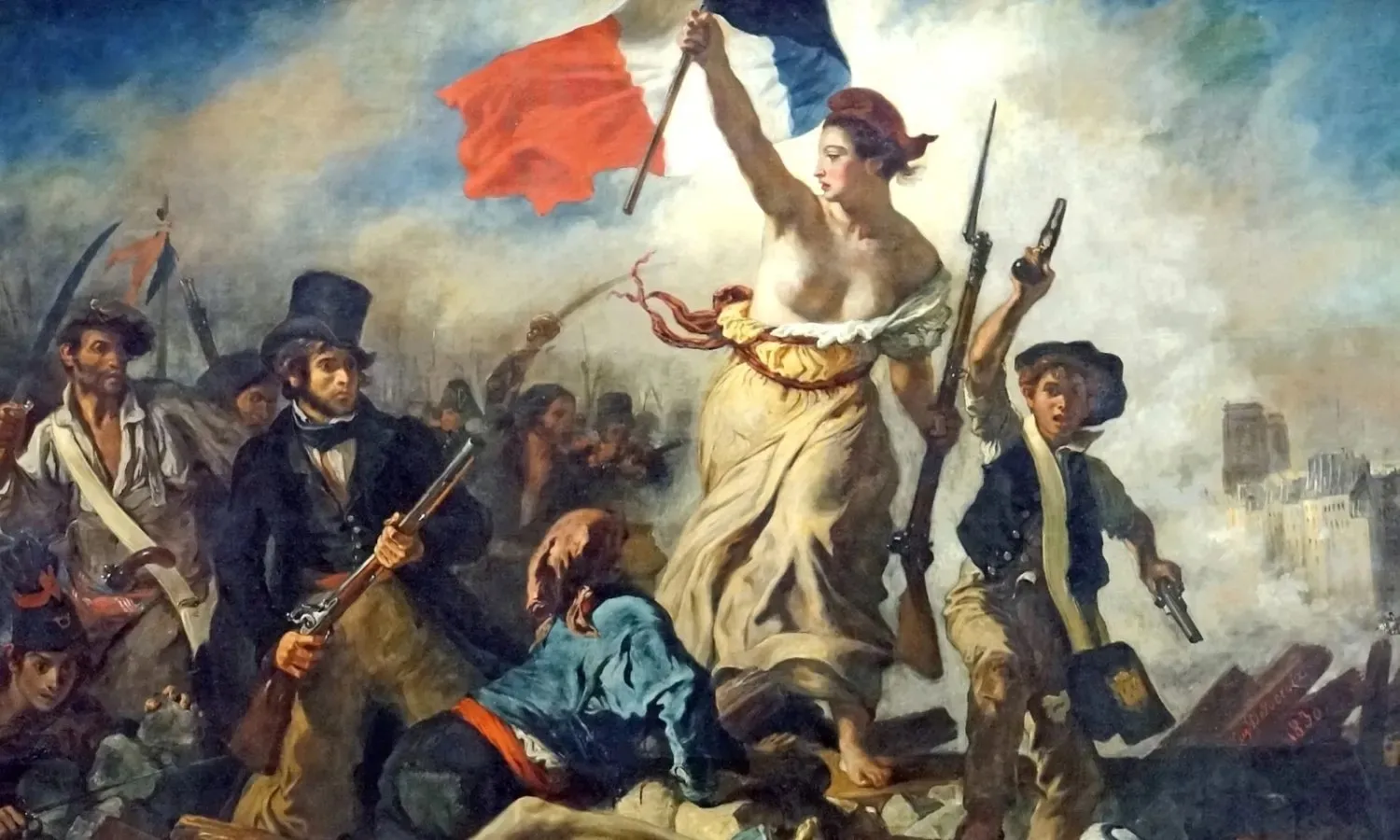
When we see women moved to fervent conviction—blocking deportation vans with their bodies, organizing campaigns that destroy careers, marching with signs that read “How Dare You”—we reach for the language we have available. Captured by algorithms. Susceptible to consensus pressure. Exploited psychological vulnerabilities.
The explanations aren’t wrong. They’re worse than wrong—adequate to everything except what matters.
We’ve learned to see cathedrals as load-bearing calculations. We can describe the stones, the angles, the distribution of weight. We can explain why the structure stands. What we cannot say—what we no longer have words for—is why anyone would build such a thing in the first place.
This is a story about fire. About where it comes from, who carries it, and what happens when a civilization forgets that it’s real.
The shame that moves men.
December 1860. Charleston, South Carolina.
The letters and diaries of that winter describe what happened to men who hesitated. A young clerk expresses mild reservations about secession at a dinner party—nothing radical, just a suggestion that perhaps the hotheads should wait, should negotiate, should consider what war would actually cost. Within a week, the machinery of social death is turning.
His mother’s friends stop calling. Young women he had courted look through him on the street. At church, the pews around his family sit empty. His own sisters ask him, at the family table, whether he has become a coward or had always been one and hidden it well.
“The ladies are the real secessionists,” wrote a visitor to Charleston that winter. “The men may debate and delay, but the women will have it done.” (1)
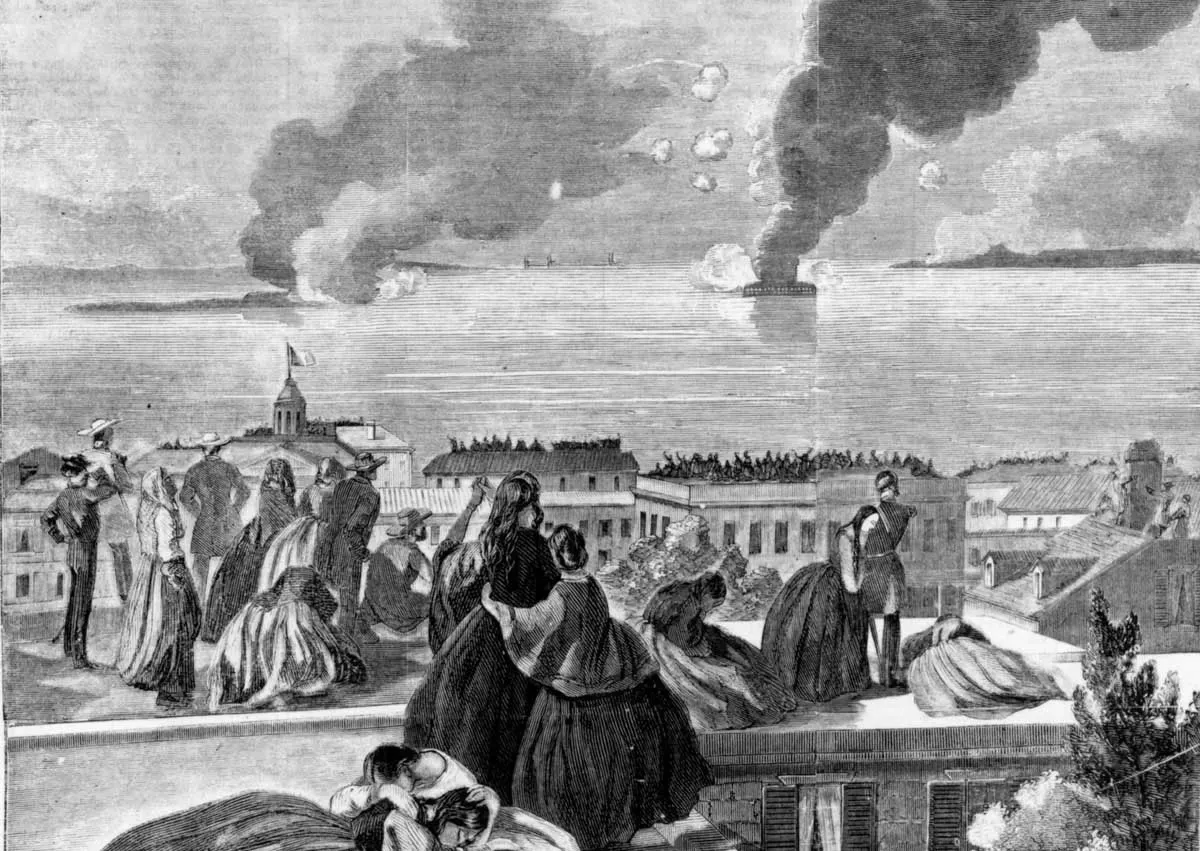
The women of Charleston had decided. Not followed. Decided. And they enforced their decision with the only weapon that mattered: the power to make a man unfit for human society.
A man could survive political disagreement with other men. He could not survive being labeled a coward by women. He could not marry, could not do business, could not show his face at church or market or courthouse. He was socially dead, and in a society where social existence was existence, that meant he was simply dead.
Within weeks, the hesitant men of Charleston were not hesitating anymore.
The materialist explanation for this is ready at hand. Women evolved in environments where social exclusion was more dangerous for them than for men—pregnancy and nursing created vulnerability that required the tribe’s protection. This made women’s psychology more attuned to consensus, more sensitive to social rejection, more motivated to maintain group cohesion.
The original formulation, from a recent essay attempting to explain why women have moved politically leftward, put it bluntly:
“You can’t hunt pregnant. You can’t fight nursing. Survival required the tribe’s acceptance: their protection, their food sharing, their tolerance of your temporary vulnerability. Millions of years of this and you get hardware that treats social rejection as serious threat.” (2)
The explanation is true. It explains nothing.
It tells us why women might fear exclusion. It does not tell us why they inflict it. It describes a defensive crouch. Charleston was an offensive.
The algorithm-capture thesis—women are susceptible to consensus pressure, smartphones created global consensus engines, the vulnerable were captured—makes the same mistake. It assumes women receive consensus. Consensus shapes them. Shaped, they cannot shape.
Look at Charleston again.
Where did the consensus come from? The women didn’t wait for men to tell them what to think. They didn’t absorb opinion from some external source and then passively conform. They decided—in parlors, in churches, in the intimate spaces where women gathered—what the community would believe. And then they made it so.
The fire carriers.
Open David Hackett Fischer’s Albion’s Seed, the magisterial study of the British folkways that became American culture. Across all four migrations—Puritans to Massachusetts, Cavaliers to Virginia, Quakers to the Delaware Valley, Borderers to the backcountry—Fischer documents something remarkable:
Most men were not church members. Their wives were. And their wives compelled them to join. (3)
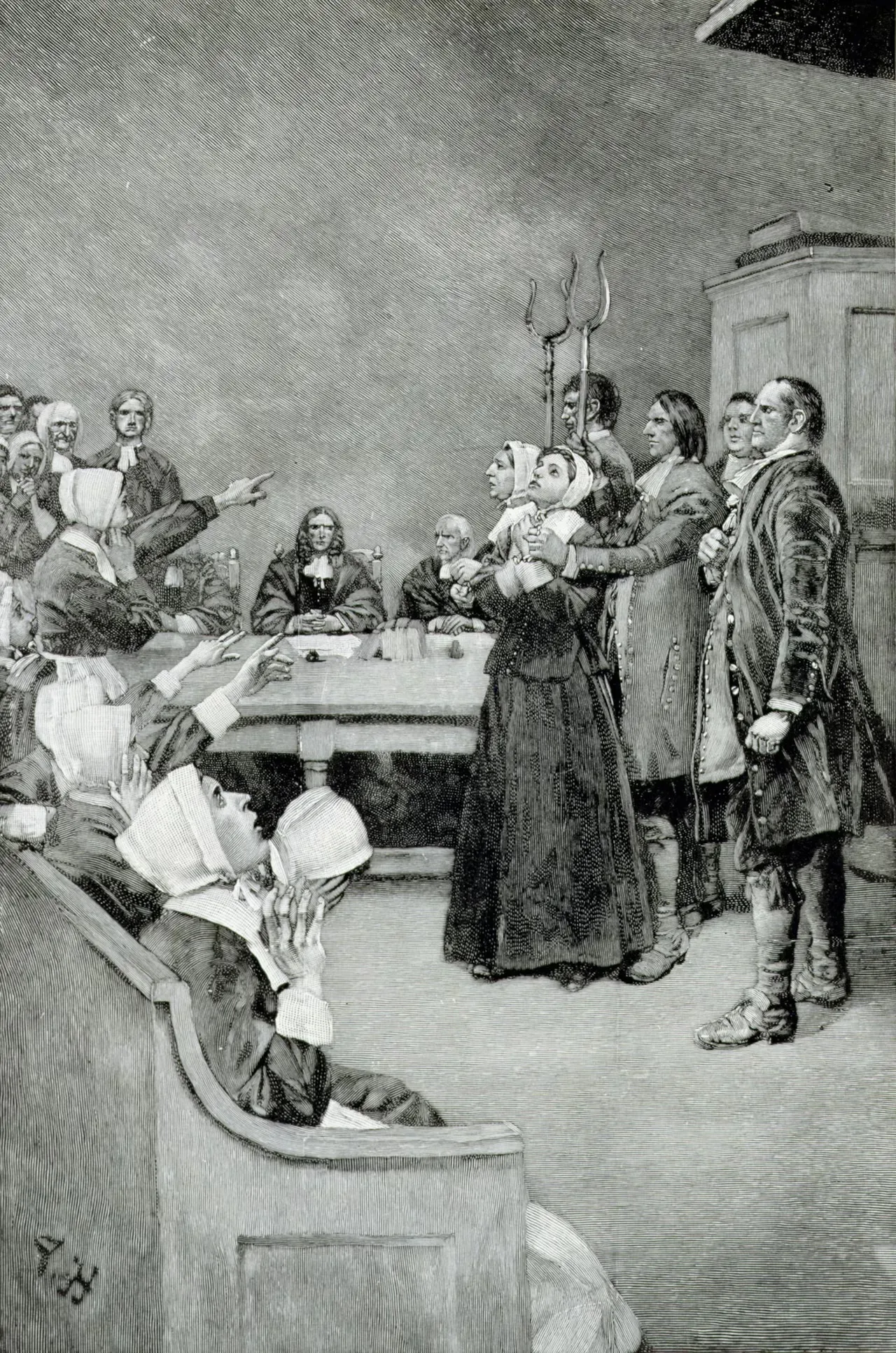
The Puritans didn’t cross the Atlantic for economic opportunity alone. They came to build a city on a hill, a covenant community that would light the world. And who maintained that covenant in the household? Who taught the children the catechism at the kitchen table? Who determined whether the family would pray before meals, keep the Sabbath, attend meeting?
In colonial British America, formal religious authority—church offices, ordained ministry, and theological publication—was dominated by men. But lived religion, the daily practice that made faith real, passed through women’s hands: teaching children, maintaining devotional life in households, forming congregational piety, and shaping the rhythms of religion on the ground.
This is not only a story about colonial America. It is a story about everywhere, always.
In many traditional religious systems, formal ritual authority has been dominated by men while women frequently make up the majority of active participants and sustain daily religious life.
Why?
Here is where we have lost our vocabulary. Evolutionary psychology, social construction, economic incentive—none of it accounts for what we observe.
The ledger.
Leymah Gbowee organized Christian and Muslim women together to demand an end to Liberia’s second civil war. They staged sit-ins. They withheld sex from their husbands. They prayed in public squares where soldiers watched with loaded weapons.
When peace talks stalled in Ghana, the women surrounded the negotiating hall. The warlords had been talking for weeks while the killing continued. Gbowee announced that any man who tried to leave without an agreement would watch her strip naked—in Liberian culture, a curse that would destroy him. (4)
The men stayed. The agreement came. The war ended.
Gbowee won the Nobel Peace Prize. But what interests me is not the prize. What interests me is the moment when she threatened to strip. The men in that room controlled armies. They had killed thousands. And they were afraid of an unarmed woman threatening to remove her clothes.
What power is this? Evolutionary psychology stutters. Social construction has nothing to say. This is something older, stranger, more dangerous than any framework we permit ourselves.
Buenos Aires, 1977.
The military junta had “disappeared” thousands—arrested them in the night, tortured them in secret prisons, dropped them drugged from helicopters into the sea. The bodies never surfaced. The government denied everything.
The mothers began to march.
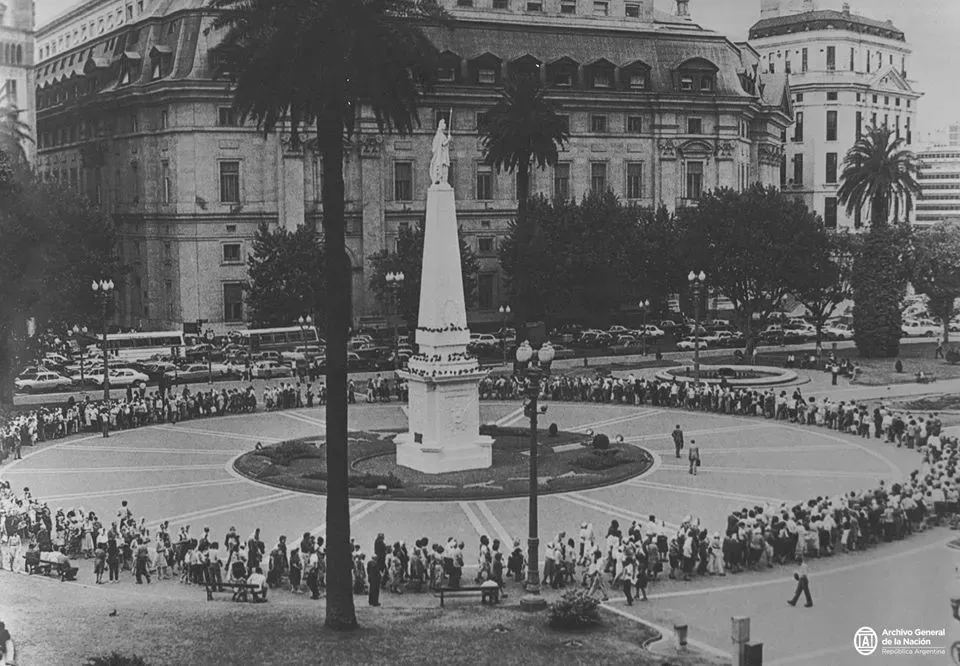
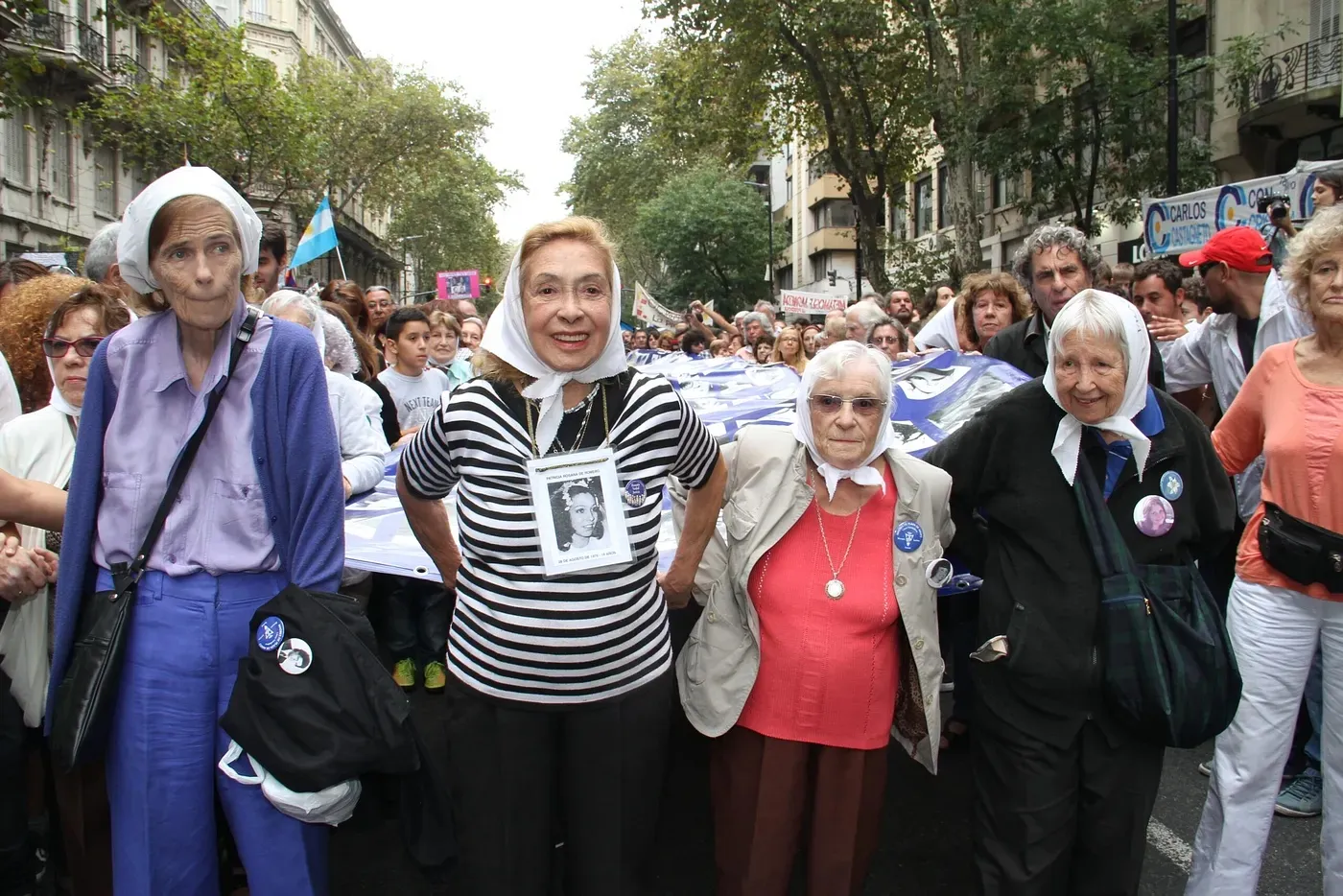
Every Thursday afternoon, in the Plaza de Mayo before the presidential palace, women in white headscarves walked in slow circles. They carried photographs of their missing children. They said nothing. They simply walked.
The junta called them “las locas”—the crazy women. They called them crazy because they dared not call them serious. But crazy women who refuse to stop are more savage than sane women who know when to quit. The junta expected the mothers to tire, to give up, to disappear themselves. (5)
The mothers kept walking.
For years. Through threats and surveillance and the murder of some of their own. Through a dictatorship and its collapse and the fragile democracy that followed. For decades, the mothers walked.
They outlasted a regime. They shamed a nation into remembering. They made it impossible to pretend the disappeared had not existed.
Britain, 1914.
The First World War had just begun, and Admiral Charles Fitzgerald founded the Order of the White Feather. The mission: organize women to present white feathers—symbols of cowardice—to men not in uniform.
It worked. God help them, it worked.
Women handed feathers to men on buses, in shops, on the street. Young women refused to be seen with men in civilian clothes. Mothers pressured sons. Sweethearts issued ultimatums. The poet Compton Mackenzie called it “idiotic persecution.” Men enlisted to escape the shame. Some who were medically unfit, or working in essential war industries, or already serving in ways invisible to the public—they received feathers and lived with the humiliation. (6)
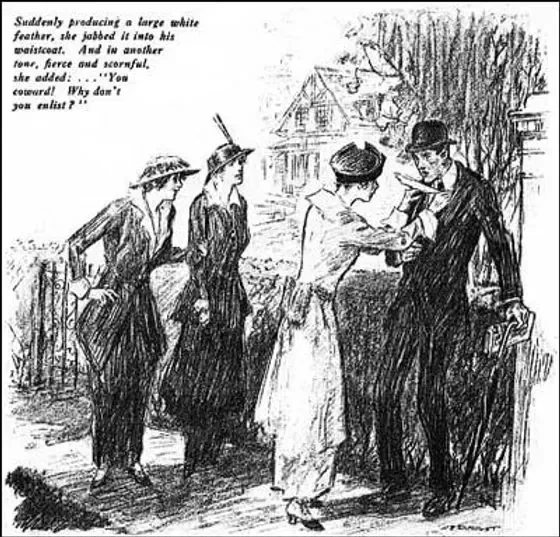
The government eventually had to issue badges for men legitimately exempted, because the women’s campaign was too effective. Too many men were enlisting out of shame rather than need.
The maternal instinct inverted—or was it? The women who handed out feathers believed they were protecting their country, their children’s future, their way of life. The mechanism was identical to women sheltering escaped slaves or hiding priests from revolutionary tribunals. Only the cause differed.
Now turn the page.
Germany, 1936.
The League of German Girls has enrolled nearly every young woman in the country. They march in formation. They sing songs about blood and soil. They learn that their highest calling is to bear children for the Reich.
Gertrud Scholtz-Klink, leader of the Nazi Women’s League, addresses them. She speaks of the sacred duty of German motherhood. Of the threat posed by racial pollution. Of the necessity to build a future worthy of their children.
The young women’s eyes shine. They believe. They believe. This is not coerced performance. This is conviction, the willingness to sacrifice that we saw in the Mothers of the Plaza de Mayo and will see in every movement that captures women’s allegiance.
Scholtz-Klink survived the war. She was tried, imprisoned briefly, and lived quietly in West Germany until 1999. She never recanted. To her dying day, she insisted she had only been supporting German families. (7)
She was not lying. She was right, in her own eyes. She believed she was protecting children. She believed she was building a future. What burned in her was the same thing that burned in Leymah Gbowee threatening to strip before the warlords.
Same instinct. Same intensity. Same willingness to sacrifice.
Different altars.
The knowledge that lives below thought.
Sit with that for a moment.
Gbowee ending a war. The mothers outlasting a dictatorship. Scholtz-Klink serving genocide. The same energy in all of them—the same conviction that they were protecting the future, defending what mattered, doing what had to be done.
The materialist has an explanation. He always does. Neurons firing in patterns shaped by evolution. Incentive structures. Network effects. He can describe the machinery with exquisite precision.
But stand in the Plaza de Mayo on a Thursday afternoon and watch the mothers walk. They are old now, the ones who remain. Their children would be in their sixties. The dictatorship fell before some of them were born. And still they walk.
The materialist describes the load-bearing calculations. He cannot explain why anyone would carry such a load for fifty years.
The hardest part of this story is the part we are least equipped to tell.
Human beings have souls. Not as a metaphor. Not as a poetic gesture toward subjective experience. Souls. The part of a person that knows good and evil, that feels the weight of the future, that can choose sacrifice over self-preservation because some things are more important than survival.
And women’s souls are shaped by their bodies in ways that matter.
I am not making a reactionary argument about women’s proper place. I am making an observation about women’s actual power.
Women bear children. Not as an incidental biological fact, but as a constitutive reality that shapes everything else. To bear a child is to participate in the continuation of existence itself. For some women, this awakens something that lives below thought—a sense that they are links in a chain stretching backward to their people’s origin and forward to a future they will never see.
When it awakens, it is unmistakable. A woman holds her daughter and sees her own mother’s face in the child’s features. She feels, without thinking, the presence of her grandmother who died before the child was born, and her great-grandmother whom no one living remembers, and all the women before that stretching back beyond memory. She feels, in the same moment, her daughter’s daughter, and her daughter’s daughter’s daughter, on and on into a future she is somehow already responsible for.
This happens in the body, in the bones, in the animal knowledge that precedes thought. The future is not a concept. It has a face. It nurses at her breast. It clutches her hand crossing the street. It asks her questions about right and wrong that require answers.
But this knowledge is not automatic. It can fail to kindle. It can be suppressed by circumstance or ideology. It can be weaponized—the Lebensborn mothers who surrendered infants to the SS were bearing children in service of a “chain” defined by race theory, not kinship. The capacity for this knowledge does not guarantee its proper use.
Still, the capacity exists—more available to women than to men, written into the body’s architecture. Men can more easily live in the present, detached from the chain, believing the future is someone else’s problem. Women’s bodies offer a different teaching. Not all receive it. But the channel is there.
This is why women so often carry the fire.
Not because they are more emotional, more susceptible, more easily captured. Because they have greater access to a knowledge that makes the future feel urgent and personal. Because, when that knowledge awakens, what happens next matters in a way that resists abstraction.
The fire—the passionate conviction that drives movements, topples regimes, sustains resistance across decades—is the energy of that investment made visible in the world. But the fire does not tell you where to point it. Awakened or weaponized, the flame burns the same.
The woman who said no.
London, 2019.
J.K. Rowling looked at the same fire that had driven every movement in this story—the fire of people convinced they were protecting the vulnerable—and said: no. Not this. Not at this altar.
She had seen the argument taking shape. Trans women are the most vulnerable. To question gender self-identification is to endanger them. Speech that makes them uncomfortable is violence. Those who refuse to affirm are bigots. Bigots must be destroyed.
Rowling recognized the structure. The identification of a victim class. The framing of disagreement as threat. The mobilization of moral enforcement against dissenters.
And she recognized what the fire was being asked to burn: women’s spaces, women’s sports, the very category “woman” as a biological reality. All to be sacrificed on an altar of gender ideology.
She refused.
The response came swift and total.
In June 2020, after Rowling published an essay explaining her concerns, Harry Potter actor Daniel Radcliffe responded within days through The Trevor Project: “Transgender women are women.” Emma Watson, Rupert Grint, and Eddie Redmayne followed with their own statements distancing themselves from her views. LGBTQ organizations GLAAD and the Human Rights Campaign issued formal condemnations. Staff at her publisher considered refusing to work on her books. (8)
Death threats arrived. Rowling later documented receiving “so many death threats I could paper the house with them,” including her home address posted online with a bomb-making manual. After the stabbing of Salman Rushdie in 2022, someone tweeted “Don’t worry you are next.” Police were already involved on other threats. (9)
Both men and women led the campaign against her—organizational heads, celebrities, activists. But women played a particular role in the social enforcement. Women organized boycotts. Women wrote denunciations. Women enforced the boundaries of acceptable opinion within their communities.
The same mechanism the Charleston ladies used against Unionists. The same mechanism the White Feather women used against men in civilian clothes. The same mechanism women have always used when they believe someone has betrayed the sacred cause.
But Rowling did not break.
She was wealthy enough to survive financial pressure. Famous enough that she could not be completely erased. Stubborn enough—or certain enough—to keep speaking.
And slowly, others began to speak too. Women who had been afraid. Women who had seen the fire and knew it was pointed at them. They watched Rowling absorb the attacks and remain standing, and they found it possible to stand themselves.
This is what the algorithm-capture thesis cannot explain.
If women are simply susceptible to consensus pressure, Rowling should have folded. The consensus was overwhelming. Every institution, every platform, every voice of cultural authority said she was wrong. The social costs were catastrophic.
She did not fold. She planted her feet and said: this altar is false.
Some women can do this. Some women look at the sacred cause of their moment—the cause that feels like protecting children, feels like defending the vulnerable, feels like duty and not choice—and they see through it to what is actually being demanded.
The women who hid Jews in Nazi Germany. The Red Guard girls who quietly refused to denounce their teachers. The Charleston wives who maintained friendships with Unionist families despite the whispers.
They exist. They have always existed. The fire is not destiny.
But to resist the fire, a woman must believe something else more strongly. She must have an altar of her own. A conviction that says: this far, but no further. Whatever the cost.
Rowling’s altar was womanhood itself. The reality of sex. The spaces and categories that women had fought for centuries to secure. She could not watch them burned, even by people burning them in the name of compassion.
The fire met something it could not consume.
The vacuum and the vessels.
The fire scorches the land.
The twentieth century hollowed out the vessels. Church attendance collapsed. Mainline Protestantism lost its grip on American culture. The shared moral vocabulary that had structured public life for generations—sin, redemption, covenant, judgment—became embarrassing, then incomprehensible.
But humans do not stop being spiritual creatures when you close their churches. The need for meaning, for sacred cause, for participation in something larger than the self—this need does not disappear.
It burns on.
Austin, Texas. 2017.
Hilda Ramirez and her son Iván have lived in sanctuary at St. Andrew’s Presbyterian Church since 2016, after fleeing Guatemala to escape domestic violence. Her asylum claim was denied. ICE wants her gone. The only thing standing between her and deportation is a church that has decided to shelter her.
The Rev. Jim Rigby, pastor of St. Andrew’s, explained to NPR why his congregation took this risk: “To me, the bottom line is more gospel than it is legal. If there is religious liberty, we should have religious liberty to obey scripture and its commandment to treat the immigrant as well as we treat citizens.” (10)
Another pastor, the Rev. Robin Hynicka of Philadelphia’s First United Methodist Church of Germantown, put it more starkly when asked if he felt any conflict between preaching morals and breaking the law: “There’s no conflict. I’ve said this before — when a law breaks the backs of God’s people, then it’s time for us to think about breaking those laws.” (11)
The women of these congregations organize in shifts. They sleep in churches on air mattresses. They answer doors when anyone knocks. They document everything on their phones. Volunteers guard the property around the clock. Since 2016, the number of churches offering sanctuary has grown from a handful to over 800. (12)
A Mexican woman named Sylvia, an undocumented immigrant who volunteers with the New Sanctuary Coalition in New York, told The Intercept that the fear sometimes leaves her legs shaking uncontrollably. But she keeps coming: “They’re trying to intimidate people and make people afraid so that they win the battle. But I’m not going to let them win. When you fall in a river, your instinct is to float, and for me to float is to keep coming here, to keep fighting. I feel I can be useful to other families, and that makes me feel good.” (13)
She wasn’t captured by an algorithm. She wasn’t following consensus. She was answering a call—the same call women have answered in every movement, righteous and monstrous, since history began.
Protect the vulnerable. Defend the innocent. Sacrifice for something greater than yourself.
The content is new. The function is ancient.
Climate activism, with its apocalyptic framing and calls for repentance. We have twelve years. The children are watching. How dare you?
Social justice, with its concepts of original sin and redemption. Check your privilege. Do the work. Silence is violence.
The sanctuary movement, with its explicit religious imagery. Churches as literal refuge. Bodies between the state and the vulnerable.
Women lead these movements. Women sustain them. Women enforce their boundaries against dissenters.
The young women who have moved twenty points leftward on the political spectrum weren’t captured by algorithms. They were called by movements that spoke the language their souls recognized.
The algorithm didn’t create this hunger. It merely showed them where the new altars were.
The children are watching.
There’s a phrase you hear in these movements: The children are watching.
Greta Thunberg’s famous line: “How dare you?” Directed at adults who have failed to protect the future.
This is not manipulation. This is the maternal instinct speaking without disguise. The children are watching. They will inherit what we leave. How dare we fail them?
It works because it is true. The children are watching. They always have been. And women have always felt the weight of that gaze more heavily than men.
The question is not whether women will respond to that weight. They will. They always have.
The question is what we tell them the children need protecting from.
The women of Charleston believed the children needed protecting from abolition, from the destruction of their way of life, from a future dominated by Yankees who did not understand their world.
The women of the Underground Railroad believed the children needed protecting from slavery, from the sin that corrupted everything it touched, from growing up in a nation that tolerated evil.
The women of the Nazi Party believed the children needed protecting from Jews, from racial pollution, from a future where German blood was diluted and German culture was lost.
The women of the Civil Rights movement believed the children needed protecting from segregation, from the lie that they were less than human, from inheriting their parents’ humiliation.
The same fire in all of them. The same eyes on the children. The same willingness to sacrifice.
We have lost the ability to argue about altars. We can describe the fire with exquisite precision — neurological correlates, evolutionary origins, algorithmic amplification. Are we so sophisticated about mechanisms that we have forgotten to ask about meaning?
Which altars are worthy?
The fire cannot tell us. The fire burns where it is pointed.
Only the soul can tell us. And only if it has been formed to recognize true altars from false ones.
What we cannot say.
Let me say plainly what this essay has been circling:
We have lost the vocabulary for the soul.
We can describe women’s political movements in terms of evolutionary psychology, and the descriptions are accurate. We can analyze them in terms of social construction, and the analyses are valid. We can model them as network effects in algorithmic systems, and the models predict real phenomena.
But we cannot say: women carry sacred conviction, and this is their power, and it matters what they carry.
We cannot say this because we do not believe in the sacred anymore. We believe in neurons, incentives, systems. We believe in explanations that can be tested, measured, optimized. We believe in a world where the cathedral is just load-bearing calculations, and anyone who speaks of its meaning is indulging in poetry at best, superstition at worst.
And so when we see women burning with conviction—forming human shields around immigrant families, organizing campaigns that destroy dissenters, marching with signs that promise to protect the children—we reach for the vocabulary we have.
Captured. Manipulated. Exploited.
We cannot say: called.
But that is what the women themselves say. That is how they experience it. Not as capture but as calling. Not as manipulation but as duty. Not as exploitation but as sacred work.
They may be wrong. The altar they serve may be unworthy. They may burn what should be preserved and preserve what should be burned.
But the fire is real. And pretending it is merely algorithmic capture is a lie we tell ourselves because we have forgotten how to speak about what is actually happening.
Women are deciding, as they have always decided, what the future will believe. They are enforcing, as they have always enforced, the moral boundaries of their communities. They are carrying, as they have always carried, the convictions that will be transmitted to the children watching from the edges of the room.
The algorithm did not give them this power. Evolution did not give them this power. Our instinct is to say “God gave it, or nature did, or the structure of existence”—as though these were equivalent, as though the source didn’t matter so long as we acknowledge the power. But this evasion is precisely our poverty. A fire without a named source is a fire without a judge. And a fire without a judge burns whatever is offered to it.
What load will they bear?
That question is not up to the algorithms. It is not determined by evolutionary pressures that operated on the savannah a hundred thousand years ago. It is not a function of smartphone adoption curves or institutional capture or economic incentives.
It is up to us. To all of us. To the whole civilization that forms the souls that will carry the fire into the future.
We get to decide what the altars are.
We get to argue about which ones are worthy.
But only if we remember that altars are real. That souls are real. That the fire is not a metaphor for something else, but the thing itself — the sacred energy that builds and destroys worlds.
The women are waiting to be shown worthy altars.
The children are watching to see what they carry.
And we have forgotten how to speak of such things.
This is our poverty. This is what we have lost.
The fire burns on anyway, seeking vessels, finding altars, consuming whatever is offered to it.
May we learn again to offer it something worthy.
Before the children stop watching.
Before the altars stand scorched and empty in the flames of Ichabod.
Sources and notes.
- Erik Larson, The Demon of Unrest: A Saga of Hubris, Heartbreak, and Heroism at the Dawn of the Civil War (2024). Contemporary accounts from Charleston in the winter of 1860–61 consistently describe women as more fervent for secession than men, with social ostracism used as the primary enforcement mechanism against moderates.
- From a 2026 essay, “Why Young Women Moved Left While Young Men Stayed Sane,” by the account @iterintellectus, responding to Bill Ackman’s question about the partisan gender gap. x.com/IterIntellectus/status/2012220254504530043
- David Hackett Fischer, Albion’s Seed: Four British Folkways in America (1989), documents this pattern across all four major colonial migrations.
- Leymah Gbowee’s account is documented in her memoir Mighty Be Our Powers (2011) and the documentary Pray the Devil Back to Hell (2008). She received the Nobel Peace Prize in 2011.
- The Mothers of the Plaza de Mayo began marching on April 30, 1977. Their story is documented extensively, including in Marguerite Guzman Bouvard’s Revolutionizing Motherhood: The Mothers of the Plaza de Mayo (1994).
- Nicoletta F. Gullace, “White Feathers and Wounded Men: Female Patriotism and the Memory of the Great War,” Journal of British Studies 36, no. 2 (1997): 178–206.
- Claudia Koonz, Mothers in the Fatherland: Women, the Family, and Nazi Politics (1987). Scholtz-Klink died in 1999 without publicly recanting her views.
- Timeline compiled from NBC News (December 19, 2019), Variety (June 8, 2020), The Week (ongoing coverage), and GLAAD statements. Daniel Radcliffe’s response was published through The Trevor Project on June 8, 2020.
- Rowling’s documentation of threats appears in her July 2022 tweet and subsequent statements. Following the Salman Rushdie stabbing in August 2022, she reported to Rolling Stone that police “were already involved on other threats.”
- NPR, “These Churches Offer Shelter and Sanctuary to Vulnerable Migrants. Here’s Why” (March 25, 2025).
- CBS News, “Churches, synagogues openly defy Trump’s immigration crackdown” (May 22, 2017).
- Church World Service tracking data, cited in multiple news sources including CBS News and NPR.
Letters on this article
None yet.
Disagree, or know something we missed? Write a letter. Letters are read, held for at least three days, and published in a weekly batch.